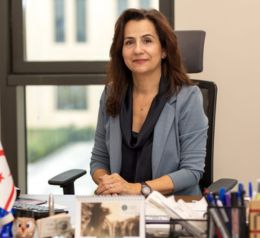
Nedime Serakinci
Cyprus International University, Northern Cyprus
Title: Highlighting Berberine's Potential as a Multifunctional Adjuvant
Biography
Prof. Dr. Nedime Serainci is a renowned expert in Medical Genetics, Stem Cell Biology, Cancer Biology, and Telomerase Biology. She earned her undergraduate degree in Biology from Istanbul University, completed her Master's degree at Çapa Faculty of Medicine, Istanbul University, and obtained her Ph.D. in Medical Biology and Genetics from Marmara University.
She conducted pioneering research at the Institute of Human Genetics, Aarhus University, Denmark, where she established the Stem Cell and Gene Therapy research division. Her research focuses on mesenchymal stem cells, gene therapy, regenerative medicine, and the molecular mechanisms of stem cell self-renewal and differentiation.
Since joining Near East University in 2011, Prof. Serainci has founded the Department of Medical Biology and Genetics, the Centre of Excellence, and several state-of-the-art genetic diagnosis and research laboratories, significantly advancing biomedical research and education in the region.
Prof. Serainci has led numerous national and international research projects and has published more than 72 peer-reviewed scientific articles and 15 book chapters. Her research on cancer stem cells and genetics has received international recognition, with several publications ranked among the world's leading scientific papers.
She has received multiple prestigious international awards, including the Best Scientific Award at the 23rd ISANH International Congress (2021). According to the AD Scientific Index 2023, she ranks first in her field in her country and is recognized among the top 2% of scientists worldwide. Since 2021, she has also served as the Health Advisor to the President of the Turkish Republic of Northern Cyprus.
Abstract
Multidrug resistance (MDR) and chemotherapy-associated toxicity pose significant challenges in cancer treatment, hindering the effectiveness of anticancer therapies. Berberine (BBR), an isoquinoline alkaloid derived from the barberry plant, has emerged as a promising adjuvant to enhance chemotherapy efficacy while potentially alleviating adverse effects. Berberine demonstrates multiple mechanisms of action, including the reversal of MDR, induction of apoptosis, regulation of the cell cycle, and inhibition of cellular signaling pathways linked to tumor progression. Notably, BBR enhances the therapeutic effects of drugs such as doxorubicin, cisplatin, tamoxifen, and 5-fluorouracil by inhibiting ABC transporters, modulating autophagy, and increasing reactive oxygen species generation. Advanced pharmaceutical formulations—such as nanoparticles, liposomes, and chitosan-based systems—have significantly improved berberine's oral bioavailability, with increases reported up to 3.88-fold. However, challenges remain in determining optimal dosages, assessing safety in combination therapies, and validating efficacy in large-scale clinical trials. Berberine has great potential as a multifunctional adjuvant but also, we still need for further research to address existing knowledge gaps and optimize its application in clinical cancer treatment protocols.
 23-24 Nov 2026
  Holiday Inn Express Bangkok, Thailand