8th World Congress on
Cancer Research and Oncology
THEME: "Advancing Innovation and Collaboration in Cancer Research for a Healthier Tomorrow"
 23-24 Nov 2026
  Holiday Inn Express Bangkok, Thailand
 THEME: "Advancing Innovation and Collaboration in Cancer Research for a Healthier Tomorrow"
23-24 Nov 2026
Holiday Inn Express Bangkok, Thailand 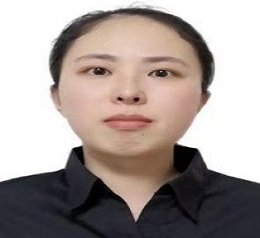
Tsinghua University
Title: Sleep Duration and Incident Liver Cancer: Evidence Consistent With a Marker of Hepatic Vulnerability in UK Biobank
Yuzi You is a researcher at the School of Clinical Medicine, Tsinghua University, with research experience in cell biology and aging-related diseases. Her previous work has focused on the biological functions of sirtuins, including SIRT1, SIRT3, and SIRT6, and their roles in aging and age-related disorders. She has published research in peer-reviewed journals such as Biochimica et Biophysica Acta - Molecular Basis of Disease, International Journal of Biological Sciences, and JMIR Aging. Her current research focuses on liver cancer and related risk factors. In the present study, she investigates the association between sleep duration and incident liver cancer using data from the UK Biobank, with particular attention to reverse causation, hepatic vulnerability, and cardiometabolic factors.
Background: Sleep duration has been associated with liver cancer, but such associations may reflect reverse causation from pre-existing hepatic, alcohol-related, or cardiometabolic disease. We examined self-reported and accelerometer-derived sleep duration in relation to incident liver cancer in the UK Biobank.
Methods: We analysed 497,917 participants with self-reported sleep duration and 99,136 with wrist accelerometry. Sleep was classified as short (<7 h/day), normal (7-8 h/day, reference), or long (>8 h/day). Incident liver cancer was ascertained by national cancer-registry linkage (ICD-10 C22); hepatocellular carcinoma (HCC) used C22.0. Cox models estimated hazard ratios (HRs), with prespecified 5-year lag, multiple-imputation, competing-risk, HCC-restricted, type 2 diabetes (T2D) interaction, E-value, and cumulative morbidity-exclusion analyses.
Results: Over a median 12.5 years, 594 liver-cancer events occurred in the self-reported cohort and 62 (over 9.1 years) in the accelerometry cohort. Self-reported short and long sleep were weakly associated with liver cancer (short HR 1.21, 95% confidence interval [CI] 1.00-1.45; long HR 1.26, 0.97-1.63), with modest E-values (1.71 and 1.83). T2D was strongly associated (HR 2.91, 2.42-3.51; E-value 5.27) but did not modify sleep associations (P for interaction = 0.481). Short-sleep estimates attenuated after 5-year lag (HR 1.06) and multiple imputation (HR 1.07), approaching the null after cumulative exclusion of baseline liver and alcohol-related morbidity (HR 1.03 and 1.01); accelerometer-derived estimates were directionally similar but imprecise.
Conclusions: Abnormal sleep duration was not robustly associated with incident liver cancer after accounting for reverse causation and baseline morbidity, and is better interpreted as a marker of hepatic, alcohol-related, and cardiometabolic vulnerability than an independent risk factor.
