3rd Global Summit on
Recycling and Waste Management
THEME: "Exploring the Novel Advances in Recycling and Waste Management"
 24-25 Mar 2027
  Paris, France
 THEME: "Exploring the Novel Advances in Recycling and Waste Management"
24-25 Mar 2027
Paris, France 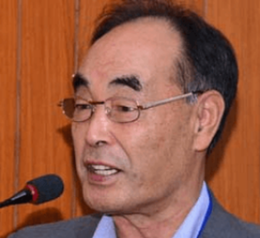
Asia Climate Change Education Center, South Korea
Title: Estimating the Economic Value of Nature to Be Gained from Conservation
Prof. and Dr. Dai-Yeun Jeong is presently the Director of Asia Climate Change Education Center and an emeritus professor at Jeju National University in South Korea where he served as an environmental professor from 1981 until his retirement in 2012. He received BA and MA degree in sociology from Korea University (South Korea), and PhD in environmental sociology from the University of Queensland (Australia).
Throughout his distinguished career, he has held key leadership and advisory roles, including President of the Asia-Pacific Sociological Association, Teaching Professor at the University of Sheffield in the United Kingdom, and the Acting Director of the Jeju Secretariat for the UNESCO World Network of Island and Coastal Biosphere Reserves.
He has also contributed to national policy as a member of the Presidential Commission on Sustainable Development of the Republic of Korea, and as Research Associate of the Environmental Policy Commission for Sustainable Development at the National Assembly of the Republic of Korea. He has represented the South Korean government delegate as a delegate to the United Nations Framework Convention on Climate Change (UNFCCC) and to the OECD Environmental Meetings.
An esteemed academic and researcher, he is the author of 13 books including Environmental Sociology, and has published 60 academic papers in both domestic and international journals. He has conducted over 100 environmental research projects supported by domestic and international organizations.
Humans can’t survive without natural resources. There are four categories of resources related to human survival. They are natural resource, human resource, human-made resource, social resource. The natural resource is called environmental resource, because nature is an environment surrounding and determining the way of human life.
Humans use nature for their survival in three ways – direct use, indirect use, and conservation. The three ways of use produce different economic value. For example, the economic value of forest is estimated different depending on whether forest is used for timber (direct use value), landscape (indirect use value) or conservation (non-use value).
In this context, this paper is for presenting the economic value of nature to be gained from conservation (non-use value), covering the following topics.
