Global Summit on
Recycling and Waste Management
THEME: "Exploring the Novel Advances in Recycling and Waste Management"
 25-26 Mar 2026
  London, UK
 THEME: "Exploring the Novel Advances in Recycling and Waste Management"
25-26 Mar 2026
London, UK 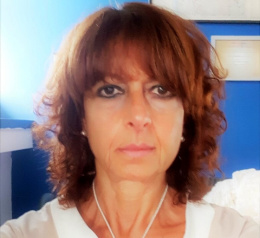
University Mediterranea di Reggio Calabria, Italy
Title: Circular solutions: Recycling agricultural wastes and sulphur recovered from refineries into fertilizers for crop quality improvement
Adele Maria Muscolo, Graduated in Biological Sciences, completed her PhD in Food Science at Naples University, Italy. In 1988 she started her professional carrier as researcher at “Mediterranea” University of Reggio Calabria where she is still working as Full Professor in soil chemistry and ecology. Since 1990 she is reviewer for International Scientific Journals. Since 2008 she is evaluator of projects for EC, International Funding Research Agencies and Italian and Foreign Research Ministries. She is examiner of PhD dissertation. She has over 200 papers in international journals with IF, Citations 6,661; H index: 44. She is editorial board member of many International Journals. She is Associate Editor for JFR and Forests. She is part of the list “World’s Top 2% of scientist of their main subfield discipline, for 2020, 2021, 2022, 2023, 2024 and 2025 (Ioannidis JPA, Boyack KW, Baas J; 2020 Updated science-wide author databases of standardized citation indicators. She is appointed as expert member of ITPS by FAO for the period 2022/2025, She is member of technical committee of Global Soil Laboratory Network (FAO), and of Steering Committee for the International Network of Soil Fertilizer (FAO) .
The increasing demand for sustainable waste management has driven the development of circular solutions that convert agricultural and industrial residues into valuable resources. This study aimed to formulate and evaluate a novel mineral-organic fertilizer using sulphur recovered from hydrocarbon refining residues and orange processing waste from the food industry, stabilized with bentonite (SBO). The objective was to assess its effectiveness as a biostimulant for improving crop quality and soil sustainability. Lettuce (Lactuca sativa L.), a globally cultivated leafy vegetable, was grown in two distinct soil types and treated with three concentrations of SBO. Comparative treatments included a conventional chemical fertilizer (NPK), horse manure (HM), and an unfertilized control (CTR). The experimental design assessed the effects of these fertilizers on plant growth, mineral uptake, and the accumulation of nutritionally relevant bioactive compounds. SBO application showed limited influence on growth parameters but significantly improved the nutritional and functional quality of lettuce across both soil types. In particular, potassium and sulphate concentrations in plant tissue increased with SBO dosage. More notably, SBO stimulated the biosynthesis of secondary metabolites—especially flavonoids, phenols, and vitamins C and E—which are known for their antioxidant and anti-inflammatory properties. Antioxidant activity, measured via DPPH and total antioxidant capacity (TAC), was consistently higher in SBO-treated plants compared to all other treatments, with the strongest effects observed at higher concentrations. In conclusion, the SBO fertilizer demonstrated considerable potential as a waste-derived biostimulant, enhancing the nutraceutical profile of lettuce while supporting environmentally sustainable agricultural practices. This work underscores the role of waste valorization in integrated waste management systems and its relevance for soil fertility, crop quality, and the circular bio-economy.
