3rd Global Summit on
Recycling and Waste Management
THEME: "Exploring the Novel Advances in Recycling and Waste Management"
 24-25 Mar 2027
  Paris, France
 THEME: "Exploring the Novel Advances in Recycling and Waste Management"
24-25 Mar 2027
Paris, France 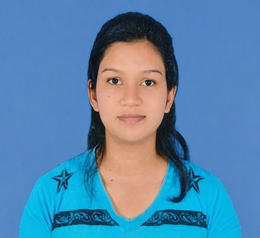
Jawaharlal Nehru University, India
Title: Microplastic Detection, Characterization, Isolation and Screening of Indigenous Bacteria for Plastic Polymer Utilization from Yamuna River water in Delhi India
Anshika Kushwaha is an early-career researcher and Research Scholar at the School of Environmental Sciences, Jawaharlal Nehru University (JNU), New Delhi, India. Her research focuses on the intersection of environmental microbiology, nanotechnology, and plastic pollution. She is particularly interested in understanding the environmental fate, biodegradation, and toxicological impacts of microplastics, with a special emphasis on microbial remediation strategies and nano-assisted bioremediation approaches. Her work involves the isolation and characterization of plastic-degrading bacterial strains, as well as the evaluation of microbial interactions with and uptake of synthetic polymers.
She has authored and co-authored several review and research articles on topics including microplastic toxicity, ecotoxicity, bioaccumulation, food-chain transfer, and emerging nanoremediation technologies. Her research also explores the interactions among nanomaterials, environmental contaminants, and ecosystem health. Beyond her research activities, she is actively engaged in science communication, academic writing, and the development of educational resources related to environmental studies and solid waste management. Her broader academic interests include environmental sustainability, microbial biotechnology, waste management, and ecological risk assessment.
Introduction: Microplastics (MPs) are persistent environmental pollutants with serious environmental and human health implications [1] due to their resistance to degradation and tendency to bioaccumulate [2]. Riverine systems act as major sinks and transport pathways for MPs, primarily originating from wastewater discharge and mismanaged solid waste [3]. These particles can also influence microbial communities, potentially promoting bacteria capable of utilizing plastic polymers as carbon sources [4]. This present study investigates the occurrence, characterization, and distribution of MPs in the River Yamuna (Delhi), along with the isolation of native bacteria with polymer-degrading potential.
Methodology: MPs were isolated and quantified from multiple sampling sites (S1 to S7) along the River Yamuna. Their morphology and color were analyzed using optical microscopy and SEM, while polymer types were identified using ATR-FTIR and SEM-EDX [5]. Various physico-chemical parameters such as (pH, EC, TDS, BOD, DO) were also assessed. Bacterial strains were isolated through serial dilution and screened for polymer utilization using Bushnell–Haas medium supplemented with PEG and PVP. All the screened polymer utilizing Bacterial strains growth were monitored for 7 days using UV-visible spectrophotometer at 600nm wavelength and selected strains were further evaluated for LDPE biodegradation over 60 days.
Results and Discussion: Fragments dominated MP composition, indicating secondary origin, while fibers reflected textile-based inputs. Beads were abundant at specific sites, suggesting industrial or cosmetic sources. MP concentration increased from S1 to S7, with S6 and S7 identified as pollution hotspots. Polymer analysis confirmed PE (dominant), PP, PET, PS, and polyurethane. Out of 50 bacterial isolates, 20 showed polymer utilization capability and stable growth pattern. In the batch of four screened strains along with control, three demonstrated significant LDPE degradation, indicated by weight loss after incubation.
Conclusion: The study highlights severe MP contamination in the River Yamuna, driven by anthropogenic activities. The identification of polymer-degrading bacterial strains suggests promising potential for bioremediation of microplastic pollution in aquatic environments.
Keywords: MPs- Microplastics, Bioremediation, Bacterial degradation, PE- Polyethylene, PEG- Polyethylene Glycol, PVP- Polyvinylpyrrolidone, LDPE- Low density polyethylene.
