Global Summit on
Recycling and Waste Management
THEME: "Exploring the Novel Advances in Recycling and Waste Management"
 25-26 Mar 2026
  London, UK
 THEME: "Exploring the Novel Advances in Recycling and Waste Management"
25-26 Mar 2026
London, UK 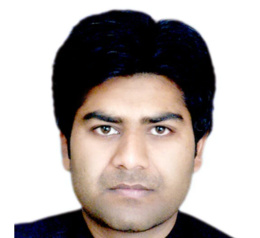
Ningbo University, China
Title: Dynamics of Bacterial Communities and Their Relationship with Nutrients in a Full-Scale Shrimp Recirculating Aquaculture System in Brackish Water
Dr. Arslan Emmanuel is a dedicated academic and researcher in the field of aquatic ecology, with a Ph.D. from the School of Marine Sciences, Ningbo University, China. With a strong foundation in Zoology and Fisheries from Pakistani institutions, he has conducted impactful research on aquaculture, fish physiology, and aquatic biodiversity. His publications span national and international journals, emphasizing wastewater bioremediation, fish health, and microbial communities. He is also a passionate educator, having taught biology and zoology at various secondary and higher secondary schools in Rawalpindi. Known for his sincerity, adaptability, and work ethic, Dr. Emmanuel has supervised numerous research thesis and participated in many national conferences. His work contributes to improving sustainable aquaculture practices and understanding aquatic ecosystems. Currently residing in Rawalpindi, Pakistan, he continues to inspire students and researchers alike through both teaching and active research in marine and freshwater systems.
Microbial communities in RASs play a critical role in maintaining water quality and supporting shrimp growth, development, and health. However, their dynamics, particularly in commercial systems, remain poorly understood. This study aimed to improve the understanding of bacterial community dynamics during shrimp culture in RASs. High-throughput amplicon sequencing of the 16S rRNA, PERMANOVA, PCoA, and other statistical analyses were used to investigate the bacterial dynamics. The entire succession process was categorized into three distinct phases, the initial, middle, and final phases, during the shrimp rearing in RASs to elucidate the spatial–temporal dynamics of the bacterial communities. Alpha diversity indicates the evenness of the bacterial community increased in the initial phase, while richness peaked in the middle phase. Notable taxonomic and functional groups within the bacterial community contributed to significant variations in the relative abundance of community composition across these phases. The dominant bacterial phyla in both water and biofilm included Proteobacteria, Actinobacteriota, Bacteroidota, and Patescibacteria. The dominant orders in both environments were Corynebacteriales, Burkholderiales, Rhodobacterales, Flavobacteriales, Saccharimonadales, and Micrococcales. Key bacterial taxa such as Pseudomonas, Mycobacterium, and Hydrogenophaga were critical for microbial community assembly, nutrient cycling, biodegradation, and water quality monitoring. Nitrite, ammonium, and nitrate were positively correlated with Mycobacterium, Rheinheimera, Taeseokela, and Thermomonas, while negatively correlated with the Cloacibacterium community composition. These findings expand our understanding of the underlying mechanisms of bacterial community succession in RASs with intensive rearing of shrimp and suggest that stabilizing environmental variables could be a useful management tool for promoting and maintaining healthy aquaculture environments.
