2nd World Congress on
Future of Aging & Rejuvenation Science
THEME: "Redefining Aging: Science, Innovation, and Longevity"
 20-21 Jul 2026
  Vienna, Austria
 THEME: "Redefining Aging: Science, Innovation, and Longevity"
20-21 Jul 2026
Vienna, Austria 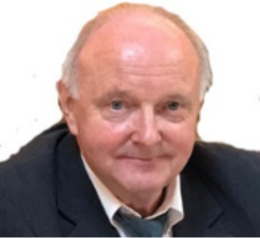
University of Regensburg, Germany
Title: Managing Knowledge-Based Integration and Interoperability in Personalized, Preventive, Predictive, Participative Precision Medicine Ecosystems
Dr. Bernd
Blobel studied Mathematics, Technical Cybernetics and Electronics,
Bio-Cybernetics, Physics, Medicine and Informatics at the University of
Magdeburg and other universities in the former GDR. He received his PhD in
Physics with a neurophysiological study. Furthermore, he performed the
Habilitation (qualification as university professor) in Medicine and
Informatics. He was Head of the Institute for Biometrics and Medical
Informatics at the University of Magdeburg, and thereafter Head of the Health Telematics
Project Group at the Fraunhofer IIS in Erlangen. Thereafter, he acted until his
retirement as Head of the German National eHealth Competence Center at the
University of Regensburg as well as Head of the globally unique International
Interdisciplinary PhD and PostDoc College. He was and is still leadingly
involved in many countries health digitalization as well as electronic health
record strategy. He published more than 600 papers, published/edited many books
and supervised a big number of PhD students from all around the world. He was
German Representative to many SDOs such as HL7, ISO, CEN, OMG, IEEE, ASTM,
SNOMED, etc., also chairing the national mirror groups. Furthermore, he still
engaged in international higher education. He is Fellow of several
international academies and played specific roles in global organizations such
as WHO, European Commission, UNESCO, etc. His extended publication list is
available at
https://epub.uni-regensburg.de/view/people/Blobel=3ABernd=3A=3A.html.
For realizing
pervasive and ubiquitous health and social care services, health and social
care system have to undergo an organizational, methodological and technological
transformation towards personalized, participative, preventive, predictive
precision medicine. For designing and managing the resulting highly complex,
distributed and dynamic ecosystem, we must consistently and formally represent
the system and its components from the perspective of all actors from different
domains including the subject of care, using different methodologies,
knowledge, language and having experiences. The challenge is the consistent,
correct and formalized representation of the transformed health ecosystem from
the perspectives of all domains involved including the legal and ethical ones,
representing and managing them based on related ontologies. The resulting
business view of the real-world ecosystem must be interrelated using the
ISO/IEC 21838 Top Level Ontologies standard. The granularity level of the
considered components may range from elementary particles up to the society and
the universe. The solution is a system-theoretical, architecture-centered,
ontology-based and policy-driven approach. Over the last 30 years, the author
developed the necessary model and framework, which is meanwhile standardized as
ISO 23903 Interoperability and Integration Reference Architecture. The approach
has been defined as mandatory for any specification or project at ISO, CEN,
IEEE, etc. addressing more than one domain. The presented approach enables
design, implementation and management of intelligent and ethical health and
social care systems as well as knowledge-based communication and cooperation of
all actors involved. Thereby, it manages also security, privacy and trust in
detail. The Keynote introduces necessary standards and methodologies for
designing and managing 5P medicine ecosystems as well as practical examples.
