2nd World Congress on
Future of Aging & Rejuvenation Science
THEME: "Redefining Aging: Science, Innovation, and Longevity"
 20-21 Jul 2026
  Vienna, Austria
 THEME: "Redefining Aging: Science, Innovation, and Longevity"
20-21 Jul 2026
Vienna, Austria 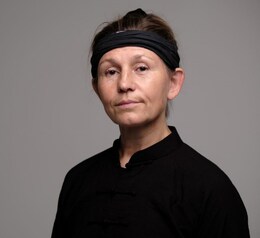
Saint - Petersburg University, Germany
Title: Lifestyle, Health and Sociodemographic Predictors of Instrumental Activities of Daily Living (IADL) Decline in Older Adults: Evidence from SHARE
Mariia Trofimova is a molecular biologist, geneticist, and Tai Chi master with a diverse background spanning scientific research, international business, and wellness practices. She earned her degree from Saint Petersburg University, where she worked as a staff researcher. Her academic work focused on DNA recombination between bacterial transposons and yeast, as well as the regulation of translation suppressor genes in Saccharomyces cerevisiae. Over the years, she has built extensive experience in both the scientific and business sectors. In addition to her scientific career, she has pursued interdisciplinary education with certifications in Digital Marketing (Udacity), Paleontology (University of Alberta), Sociology (University of Amsterdam), and Data Science with Python and SQL (IBM).A dedicated practitioner of Tai Chi, she specializes in the Old Yang style and was awarded a gold medal at the 2025 China National Championship in Xi’an. Currently based in Germany, she leads a Tai Chi and Qigong group in Munich, promoting holistic health and well-being.
The notion that “it's never too late” may obscure the reality that no practices adopted late in life can fully offset the accumulated biological and psychosocial consequences of earlier decades. This threshold, referred to as the “point of no return,” varies individually but is shaped by lifelong cultural norms, daily habits, and access to preventive care.
This study offers a comparative overview of aging-related practices within European countries, examining how early-life preparation, community participation, and continuous adult learning contribute to healthier aging trajectories. Using publicly available indicators from WHO and European statistical sources, preliminary associations with Healthy Life Expectancy at age 60 (HALE60) were explored through Pearson correlations and visual analysis of scatter plots.
A controlled tri-factor comparative approach was applied: economic level (PPS) was examined together with one cultural or behavioral indicator at a time (non-formal education 55–64, weekly aerobic activity 65–74, AROPE65, and selected participation metrics). Despite the small sample size (25 countries), this method allowed an initial assessment of independent tendencies without the instability that full multiple regression would produce in such a dataset.
The results suggest that economic conditions provide the strongest and most stable associations with HALE60, while cultural and behavioral indicators contribute smaller but recurring contextual effects. These findings support the view that active aging is not a set of late-life practices but a lifelong, culturally ingrained trajectory shaped by educational opportunities, social participation, and preventive behaviors formed long before old age.
Criteria for cross-cultural transfer of effective practices—cultural compatibility, cost, existing social infrastructure, and time required for adoption—are proposed as a framework for understanding how diverse societies can strengthen healthy aging.
