International Conference on
Catalysis & Chemical Engineering
THEME: "Stretching the Horizons of Expertise in Catalysis and Chemical Engineering"
 25-26 Mar 2024
  Barcelona, Spain
 THEME: "Stretching the Horizons of Expertise in Catalysis and Chemical Engineering"
25-26 Mar 2024
Barcelona, Spain 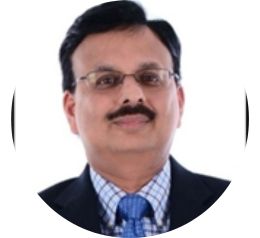
Director- Global Technology Innovation; Life Science Chemistry, United States
Title: Development of 21 st Century Pd Catalysts for Cross-Coupling Applications
Thomas
J. Colacot joined MilliporeSigma (a business of Merck KGaA, Darmstadt, Germany)
in 2018 as an R&D Fellow and Director of Global Technology Innovation, Life
Science Business, in Milwaukee, WI. He has extensive experience in developing
new and innovative products and technologies with a very strong track record of
commercialization of the catalysts technology for industrial applications in
the area of organic synthesis. He has over 120 peer-reviewed publications,
three books and about 70 patents internationally. Thomas is a recipient of many
awards and honours, including the 2021 Scientific Curriculum Vitae (Best
Scientist Award) from the Chairman of the Board and CEO of Merck KGaA,
Darmstadt, Germany; the 2018 Outstanding Researcher Award from Merck KGaA,
Darmstadt, Germany; the 2017 Catalysis Club of Philadelphia Award for
outstanding contributions in the area of catalysis; the 2015 ACS Industrial
Chemistry Award; the 2015 IPMI Henry Alfred Award; the 2016 Indian Institute of
Technology Madras Distinguished Alumnus Award for Technology Innovation; the
2016 Chemical Research Society of India (CRSI) Medal; and the 2012 RSC Applied
Catalysis Award and Medal. Colacot was responsible for developing a very
successful homogeneous catalysis program at Johnson Matthey from 1995 to 2018.
Later he developed several novel ligands and Catalysts including MPhos for
MilliporeSigma. In addition to PhD and post-doctoral experiences he holds an MBA
degree. He has given more than 400 presentations globally. He also acts as a
visiting professor to many Universities and institutes globally. He is
considered to be though leader in Pd catalysed cross coupling.
