6th Asia-Pacific
Mental Health and Well-being Congress
THEME: "Future Directions: Pioneering Mental Health and Well-being Initiatives"
 23-24 Nov 2026
  Holiday Inn Express Bangkok, Thailand
 THEME: "Future Directions: Pioneering Mental Health and Well-being Initiatives"
23-24 Nov 2026
Holiday Inn Express Bangkok, Thailand 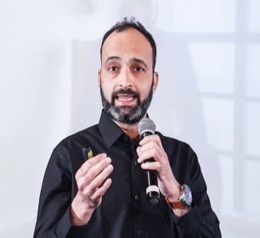
Train My Brain® , India
Title: The Missing Curriculum: Purpose, Attention and Mental Wellbeing in a Hyper-Connected World
The modern world has given us unprecedented access to information, connectivity and opportunity, yet being constantly connected does not necessarily mean being mentally well. While education and professional environments continue to emphasise knowledge, achievement and performance, essential human capabilities such as self-awareness, purpose, emotional regulation and attention management often remain underdeveloped. This paper explores the idea of a “missing curriculum” for mental wellbeing in a hyper-connected world.
Drawing on Anish Baheti’s work as an Ikigai Coach, educator, speaker and founder of Train My Brain®, the paper examines the relationship between purpose, attention and psychological wellbeing. It explores how digital overload, fragmented attention and externally defined measures of success can influence an individual’s sense of meaning, identity and emotional balance. The approach combines conceptual reflection with practical frameworks used in coaching, experiential learning and wellbeing education, including self-awareness exercises, purpose discovery through Ikigai, reflective questioning and meditation-based practices.
The central proposition is that mental wellbeing should not be treated merely as a response to distress but developed proactively as a human capability. Individuals need opportunities to understand themselves, identify what gives their lives meaning, manage their attention consciously and build practices that support emotional resilience.
The paper proposes three foundational questions for a practical wellbeing curriculum: What has my attention? Why does it have my attention? And is it worthy of my life? By bringing purpose, self-awareness, attention and emotional wellbeing into everyday learning, workplaces and communities, the missing curriculum can become a practical pathway from simply knowing more to being well.
