6th Asia-Pacific
Mental Health and Well-being Congress
THEME: "Future Directions: Pioneering Mental Health and Well-being Initiatives"
 23-24 Nov 2026
 Holiday Inn Express Bangkok, Thailand
THEME: "Future Directions: Pioneering Mental Health and Well-being Initiatives"
23-24 Nov 2026
Holiday Inn Express Bangkok, Thailand 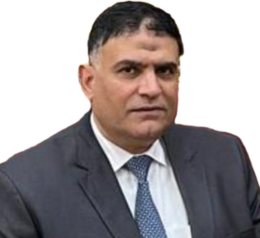
Former Director, National Center for Educational Research and Development (NCERD), Egypt
Title: Interdisciplinary Studies as an Approach to Humanizing Educational Curricula: A Comparative Field Study in Five Arab Countries
Prof.
Dr. Mandour Abd El Salam Fath Allah Abd El Salam is a distinguished professor
of Curriculum and Instruction, Science Education, and Educational Technology.
He previously served as Director of the National Center for Educational
Research and Development (NCERD), Dean of the Curriculum Research Division, and
Editor-in-Chief of the Journal of Educational Research.
He
earned his PhD in Education, specializing in Curriculum and Instruction and
Educational Technology, from Menoufia University in 2000. He also holds a
Master’s degree in Science Curriculum and Instruction, a Special Diploma in
Education and Psychology, and a BSc in Science and Education (Chemistry and
Physics), with Excellent with Honor, from Alexandria University. In addition,
he holds the International Computer Driving Licence (ICDL) and is a certified
Trainer of Trainers (TOT). His academic achievements include receiving the
Prof. Dr. Youssef Saleh El-Din Kotb Award for the Best PhD Thesis. His career
reflects extensive expertise in science education, curriculum development,
educational research, and educational technology.
This study aimed to examine the extent to which
interdisciplinary studies are integrated into secondary school curricula in
five Arab countries (Egypt, Saudi Arabia, the UAE, Jordan, and Morocco), and to
demonstrate their role in humanizing curricula and enhancing students’
psychological well-being. It stemmed from a research gap represented by the
scarcity of comprehensive Arab studies on human development experts’
perceptions of humanizing curricula through the interdisciplinary approach, the
weak inclusion of soft skills and human values, centralized decision-making,
and limited women’s participation. The study sought to answer questions
concerning the extent of interdisciplinary studies integration, how curricula
address human values, soft skills, and students’ psychological well-being, the
perceived impact of interdisciplinary approaches, the main challenges and
opportunities, and the proposed strategic framework. It employed a
mixed-methods design, combining a standardized 27-item questionnaire across
five dimensions—interdisciplinary integration, human values, the impact of
psychological well-being, challenges, and opportunities—with semi-structured
interviews, document and policy analysis, and curriculum review. Reliability
coefficients (Cronbach’s alpha) ranged from 0.87 to 0.92. The sample consisted
of 200 experts, 40 from each country, including university professors,
curriculum experts, and school leaders. Findings showed that the overall mean
for interdisciplinary studies integration and its impact on well-being ranged
from moderate to high, with the UAE ranking first, while Egypt and Morocco
indicated a greater need for systemic reform. In addition, 85% of experts
reported a significant soft-skills gap, 90% identified bureaucracy as a major
obstacle, 88% supported interdisciplinary integration, and 75% endorsed
project-based learning. Thematic analysis revealed themes of bureaucracy,
life-skills deficit, teacher readiness, values and identity, partnership gaps,
and women’s empowerment. The study concluded with a five-step strategic
framework and recommendations including designing interdisciplinary units,
training 10,000 teachers by 2027, establishing innovation centers and
partnerships, allocating 30% of scholarships to girls, reducing bureaucratic
barriers, and building a national monitoring system for soft skills and
well-being.
