Scholars 6th Asia-Pacific
Mental Health and Well-being Congress
THEME: "Future Directions: Pioneering Mental Health and Well-being Initiatives"
 23-24 Nov 2026
  Holiday Inn Express Bangkok, Thailand
 THEME: "Future Directions: Pioneering Mental Health and Well-being Initiatives"
23-24 Nov 2026
Holiday Inn Express Bangkok, Thailand 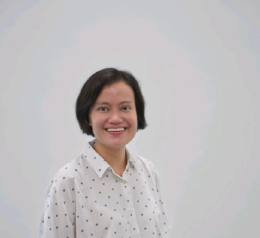
Keele University, UK
Cultural Perceptions and Interpretations of Childhood Trauma: A Stakeholder Consultation on Research Efficacy within a Singaporean Counselling Training Programme
Ellen
Fong is a doctoral student at Keele University, UK. She is a registered
counsellor and clinical supervisor with the Singapore Association for
Counselling (SAC) and a registered member of the British Association for
Counselling and Psychotherapy (BACP). Ellen is also currently a full-time
faculty member in a graduate counselling programme in Singapore, where she is
involved in the education and supervision of future counselling professionals.
Drawing from evidence-based approaches, she integrates research, teaching, and
practice in her professional work.
This
study investigates the efficacy and appropriateness of proposed doctoral
research exploring how culture influences perceptions and interpretations of
childhood trauma within a Singaporean counselling training programme. The
objectives were to determine stakeholders' understanding of childhood trauma in
a cultural context, gather views on further research in this topic, and explore
the perceived utility of the findings for teaching, supervision and curriculum
development.
The
scope involved a qualitative design that included a scoping review of 19
peer-reviewed articles and semi-structured interviews with three purposively
selected faculty members who served as key stakeholders. Methodologically, the
study was grounded in constructivism and phenomenology, utilising Reflexive
Thematic Analysis to identify patterns in the data while managing the
researcher’s insider position.
Results
from the scoping review highlighted that Western Adverse Childhood Experience
(ACE) frameworks often overlook culturally specific adversities, such as
"left-behind" experiences and the normalisation of abusive discipline
under Confucian values in Asia. Stakeholder interviews yielded five themes: (1)
cultural framing of trauma beyond diagnostic manuals; (2) the urgency of research
to bridge theory-practice gaps; (3) challenges in recruitment due to
"saving face" culture; (4) the necessity of robust ethical
safeguards; and (5) practical design recommendations, such as using
third-person hypothetical framing. Table 1 summarises the six themes from the
scoping review, while Figure 1 shows the thematic findings from the stakeholder
interviews.
The
study concludes with stakeholders affirming a genuine gap in counselling
education in Singapore. Key recommendations included trauma-informed and
culturally sensitive questioning, and transparent management of the
researcher’s dual lecturer–researcher role for the next phase of research with
counselling students. This study confirms the feasibility and ethical soundness
of further research and provides a refined foundation for its design.
