6th Asia-Pacific
Mental Health and Well-being Congress
THEME: "Future Directions: Pioneering Mental Health and Well-being Initiatives"
 23-24 Nov 2026
  Holiday Inn Express Bangkok, Thailand
 THEME: "Future Directions: Pioneering Mental Health and Well-being Initiatives"
23-24 Nov 2026
Holiday Inn Express Bangkok, Thailand 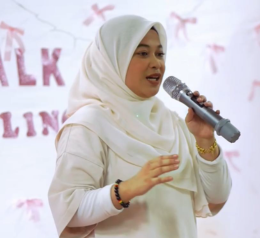
NGO Empati, Malaysia
Title: From Physical Circles to the Metaverse: Leveraging Virtual Anonymity and the Online Disinhibition Effect to Neutralize Mental Health Stigma in Malaysia
Syahida Zulkarnain is the Founder and President of NGO Empati, a Malaysian youth mental health organisation focused on community-based recovery, early intervention, and stigma reduction. Drawing from lived experience as a mental health survivor, she has developed programmes that connect counselling, peer support, advocacy, and creative community engagement. Her flagship initiative, Lepak & Luah, has reached hundreds of young people through counsellor-led sessions designed to create safe spaces for emotional disclosure and support. She is now leading the initiative’s expansion into digital environments, including a Roblox-based platform that explores anonymity, avatar embodiment, and the online disinhibition effect as tools to improve help-seeking among youth.
Access barriers and social stigma remain critical hurdles in youth mental health services within Malaysia, where structural and confidentiality fears often deter early help-seeking. This study presents the hybrid expansion of "Lepak & Luah," an established community counseling initiative originally executed through 24 physical sessions engaging 720 youth participants. The project has now scaled into a virtual platform within the Roblox ecosystem, providing a digitally safe, gamified 3D space that leverages user anonymity to bridge the gap between clinical support and community outreach.
Qualitative data from user empathy workbooks (N=11 in the pilot phase) highlighted severe psychological burdens kept secret from families. Participants disclosed childhood trauma, the overwhelming demands of living with autism, and relationship grief. Notably, the platform facilitated the disclosure of highly stigmatized identities, such as Bipolar Disorder 2 and hidden struggles with sexuality (bisexuality). Participants reported feelings of being "trained to survive, not live," illustrating deep-seated survival mechanisms that hinder emotional growth. While participants demonstrate high openness to change, they expressed significant fears that "letting go" of these burdens might cause them to lose their identity or trigger the return of painful memories.
Preliminary insights show that avatar embodiment triggers the online disinhibition effect, successfully lowering social anxiety, neutralizing shame, and accelerating emotional self-disclosure compared to face-to-face setups. This virtual anonymity allows for a "culturally safe" space where youth feel empowered to discuss issues that are typically taboo in Malaysian society. Ultimately, this project demonstrates how translating verified, counselor-led group dynamics into immersive metaverse environments can dramatically bridge the mental health gap, providing highly accessible early psychological interventions for contemporary Malaysian youth.
